

Save up to 80% on your villa’s electricity costs
A custom-designed solar system turns your villa into its own power plant, reduces monthly electricity bills, and typically pays for itself within 4–6 years, delivering near-free energy for decades thereafter.
Our Tier-1 panels come with a 25-year performance warranty and degrade by only 0.25–0.5% per year. High-quality inverters typically last 10–15 years.
Get My Solar Quote
Problems Solar Can Solve
Get My Solar Quote
High bills and unreliable power
Electricity in Thailand costs around THB 4.26 per kWh on average. Running air conditioners, pools, and filtration systems can easily push monthly bills to THB 5,000–7,000. Tariffs continue to rise alongside fuel prices, while the grid is prone to regular outages and voltage fluctuations.
High energy consumption
Pools, spas, air conditioning, filtration systems, and lighting consume significant amounts of electricity. During the hot season, air conditioning often runs almost around the clock, and on resort islands, tariffs are often higher than on the mainland.
Rising tariffs and fuel prices
Government data shows a steady increase in electricity tariffs. Even if prices temporarily decline, the long-term trend remains upward.
Solar energy protects you from future price increases by allowing you to generate your own electricity.
Unstable grid and power outages
Tropical storms and grid overloads can cause power outages. For rental villas, this is especially critical, as outages reduce guest comfort and can damage equipment.
How Solar Improves Your Energy Situation
Turn sunlight into reliable, low-cost electricity. A custom-designed system intelligently balances power between solar, the grid, and battery storage, ensuring uninterrupted energy supply while reducing your electricity bills.
Get My Solar QuoteSolar Panels
Installed on rooftops or canopies, they convert sunlight into electricity. Tier-1 panels last 25 years or more.
Inverter
Converts direct current (DC) into alternating current (AC) and manages energy flow between your home, battery, and the grid. High-quality inverters typically last 10–15 years.
Grid
Excess energy can be exported to the grid, with credits applied to your bill. At night, your home draws only a minimal amount of electricity from the grid.
Battery (Optional)
Hybrid systems store excess energy for use at night and provide backup power during outages. Battery lifespan typically ranges from 5 to 15 years.
Recommended system architecture
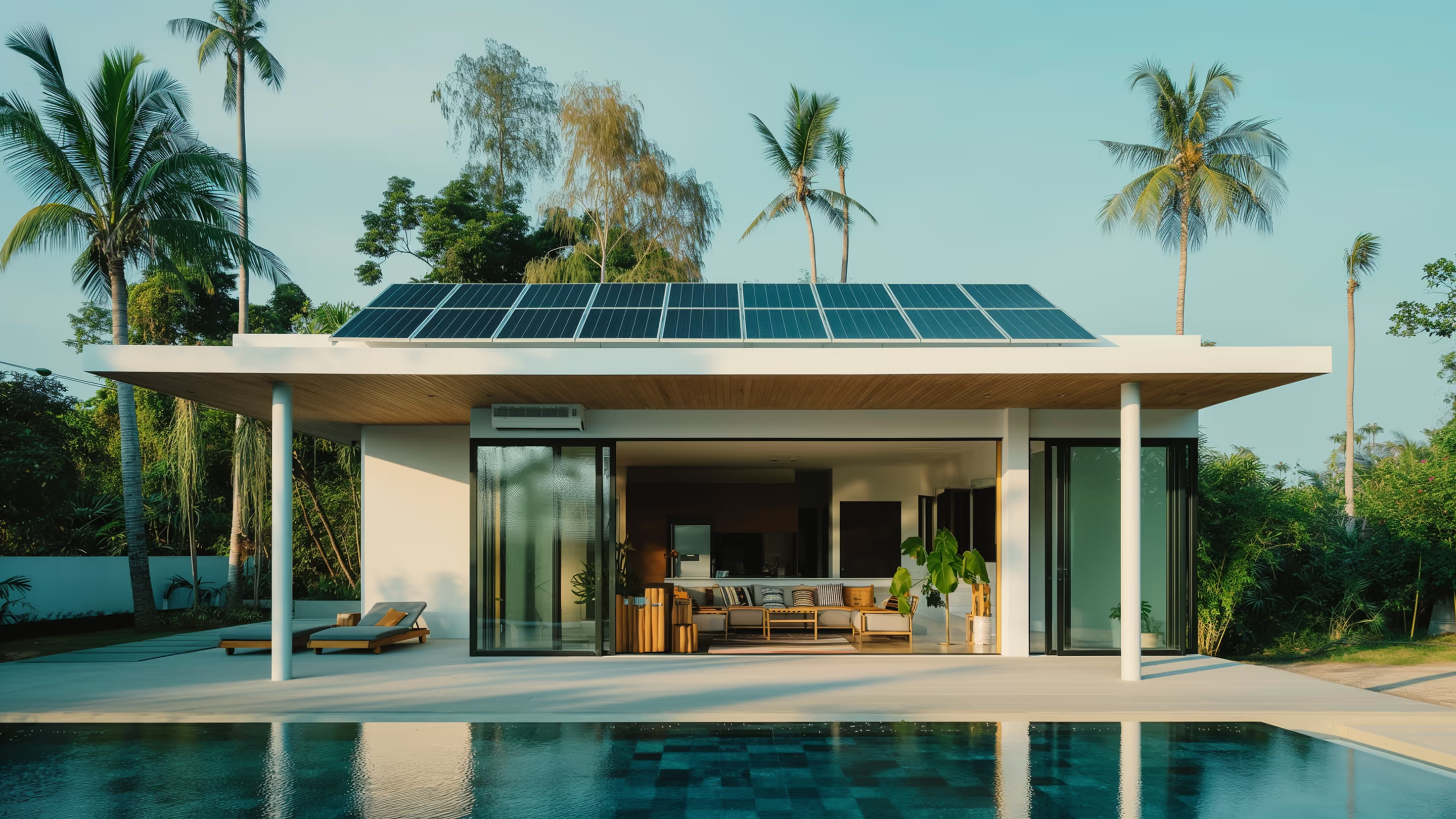
We start with a detailed energy audit, roof analysis (area, tilt, shading), and your consumption profile. We then calculate the optimal number of panels and inverter capacity to cover 60–100% of your daytime usage and ensure a fast return on investment.
Savings: How Much Can You Save?
A solar system can reduce grid electricity consumption by 30–80%. Below are illustrative examples for villas with different average loads, using simplified calculations based on a tariff of THB 4.26 per kWh and 50% savings.
Example: a villa owner in Chiang Mai installed 10 × 560 W panels (≈5.6 kW system). In summer, the system generates 20–25 kWh per day, and during the rainy season, 15–20 kWh. Even on cloudy days, it covers about half of the consumption, reducing electricity bills by more than 50%.
Even a relatively small system can save THB 2,000–3,000 per month and tens of thousands per year. And as electricity prices continue to rise, your actual savings will only grow over time.
What You Get With Us
Get My Solar QuoteProperty energy report
Current system condition, key energy consumers, losses, constraints, and opportunities.
Implementation roadmap and timeline
A step by step roadmap covering the design, installation, and commissioning phases.
Estimated savings range
An estimate of how much of your energy consumption can be covered by a solar or hybrid system, based on measured loads and efficiency improvements.
Additional Benefits
Why Proper System Design Matters
Not all solar systems are created equal. Installing panels alone is not enough. If the system is not properly designed, you may either overpay for unnecessary capacity or end up with insufficient power and limited results. That’s why we start with a detailed energy audit:
Proper system design helps you avoid unnecessary equipment costs while maximizing performance. We use Tier 1 certified equipment and design each system individually to match your needs.
Why Proper System Design Matters
Not all solar systems are the same. Simply installing panels is not enough. If the system is not properly designed, you may end up overpaying for excess capacity or facing a shortfall in power and disappointing results. That’s why we start with a detailed energy audit:
Get My Solar QuoteConsumption analysis
We analyze daily and seasonal loads, including air conditioning, pumps, and lighting.
Roof and orientation assessment
We assess available area, tilt, shading, and the optimal angle for panel placement.
System sizing calculation
We determine the right number of panels and the optimal inverter capacity to cover 60 to 100% of your daytime energy use while ensuring a fast payback.
Optional battery
We size the battery capacity based on your energy needs and budget.
Our Audit Process
Get My Solar QuoteRoof Inspection
Our engineers assess your roof’s surface, orientation, shading, structure, and access to ensure optimal panel placement.
Real usage load analysis
We install metering equipment to track real time consumption, identify major loads, peak usage hours, and the key drivers behind your electricity bills.
Peak & daytime analysis
We analyze daytime consumption versus nighttime peaks and model different scenarios, including partial or full coverage with solar and hybrid systems.
System architecture and equipment selection
We present tailored system options, including on grid and hybrid configurations, with or without battery storage. Equipment is selected based on performance requirements and project goals, not from a one size fits all kit.
Project budget and payback strategy
You receive a clear cost range and a transparent payback strategy with no unrealistic promises. Reducing consumption before going solar allows you to install a smaller, more cost-efficient system.
FAQ
How long does an on-site energy audit take?
Installing the audit equipment takes about 30 minutes. During this time, our engineer will need access to the electrical panel.
Do I need to purchase and install the system immediately?
No. The audit is a separate first step. You receive a clear plan and structured options, and you can make the implementation decision at your own pace.
What if the roof is complex or has restrictions?
We consider all constraints and propose a solution tailored to your property’s actual conditions. In some cases, this may affect the system architecture and installation approach.
Do you handle PEA requirements and grid connection?
Yes. We design and commission systems in full compliance with PEA requirements and support the entire documentation and grid connection process.
Do you only install solar panels?
No. We design the entire energy system, including solar generation, hybrid configurations, battery storage, energy management, and ongoing service support.
Stop Overpaying for Electricity
Every month without solar is money you pay to the utility.
Get your free energy audit and system assessment. You’ll receive a detailed report with recommendations, payback timeline, and a 20-year savings forecast.
